Everyday evangelism can sound like pressure.
Like a responsibility you’re failing. Like a conversation you’re supposed to force. Like one more thing to carry.
But what if it’s not a have to?
What if it’s a get to?
What if sharing Jesus is less about having the perfect answer and more about recognizing what God is already doing in the people around you?
Everyday evangelism is not reserved for pastors, missionaries, or people who seem fearless in every conversation. It belongs in your kitchen, your workplace, your school, the coffee shop, the grocery store, and the group chat.
God has placed you in real relationships with real people. And He invites you to carry His love there.
THE GOSPEL IS STILL THE GREATEST MIRACLE
In 2 Corinthians 5, Paul writes that anyone in Christ is a new creation. The old is gone. The new is here.
That is the miracle.
Jesus doesn’t only improve a life. He makes people new. He meets anxiety, shame, depression, purposelessness, sin, and brokenness with His love. He brings spiritually dead people to life.
That’s good news.
The word evangelism literally points to good news. It is the announcement that God has made a way back to Himself through Jesus. Sin separated us from God. Jesus stepped in. He took our place. He paid what we could not pay. And through Him, we can be reconciled to God.
Paul goes even further: God has given His people “the ministry of reconciliation.” We are Christ’s ambassadors, as though God were making His appeal through us.
God could speak any way He wants. He could make the clouds part. He could make trees start talking. But He chooses to work through ordinary people who have encountered His extraordinary love.
Not just staff. Not just leaders. You.
God does not need more people trying to be someone else. He made you to love the people connected to your actual life.
DON’T ASK WHAT SOMEONE ELSE WOULD DO
It is easy to look at confident Christians and think, I could never do that.
Good news: you do not need to become somebody else.
The better question is this: What would Jesus do if He were me?
If Jesus lived your life, worked your job, attended your school, knew your neighbors, sat at your table, and carried your story, how would He show people the love of God?
That question changes the goal.
You are not trying to deliver a polished speech. You are not trying to win an argument. You are learning to live awake to the Spirit, interested in people, and ready to speak about the hope you have.
1 Peter 3:15–16 says to always be prepared to give a reason for the hope within you, but to do it with gentleness and respect.
Gentleness and respect matter.
People are not projects. They have stories. They carry questions, wounds, doubts, and desires. Love makes room for all of it.
EVERYDAY EVANGELISM STARTS WITH PRAYER
You cannot transform a human heart. Only God can.
That is why prayer is the first step in evangelism. Before we talk to people about God, we talk to God about people.
Start the day simply:
“Jesus, show me where You are already at work. Give me eyes to see people. Give me courage to love them well. Do what only You can do.”
Then make it personal. Write down three to five people you know who do not yet know Jesus. Pray for them daily.
Not as a task. As an act of love.
Prayer moves us from fear to dependence. It reminds us that evangelism is not our performance. We take the initiative, but God brings the transformation.
It also helps us notice opportunities that were there all along: the coworker having a hard week, the friend asking a deeper question, the barista who needs prayer, the neighbor who feels alone.
Sometimes the first breakthrough is simply seeing people differently.
YOU HAVE INFLUENCE THAT NO ONE ELSE HAS
You have a sphere of influence that nobody else can replace.
Your coworkers may never meet a pastor. Your friends may not walk into a church building. The people who know you at school, at the gym, on your team, or in your neighborhood know you.
And God put you there on purpose.
This is not about being loud. It is about being faithful.
Receive the love of God. Give it away.
That is a simple daily mission. Let God fill you with His love, then look for ways to pass that love on through attention, encouragement, generosity, prayer, truth, and honest conversation.
You can invite someone to church. You can invite them into a conversation. You can ask how they are really doing. You can listen without rushing to fix anything. You can pray when they share a need.
Everyday evangelism grows in everyday relationships.
YOUR STORY REFLECTS GOD’S GLORY
You have a story. And your story is more powerful than you think.
No one can argue with what Jesus has done in your life. You are the expert on your own story.
Paul models this in Acts 26. He explains who he was before Jesus, how he encountered Jesus, and what changed after Jesus.
That is a helpful framework for every follower of Christ:
- Before Jesus: What was your life like? What were you carrying, chasing, or struggling with?
- Meeting Jesus: How did faith become personal? What shifted?
- After Jesus: What has He changed? Where has He brought freedom, hope, purpose, forgiveness, or new life?
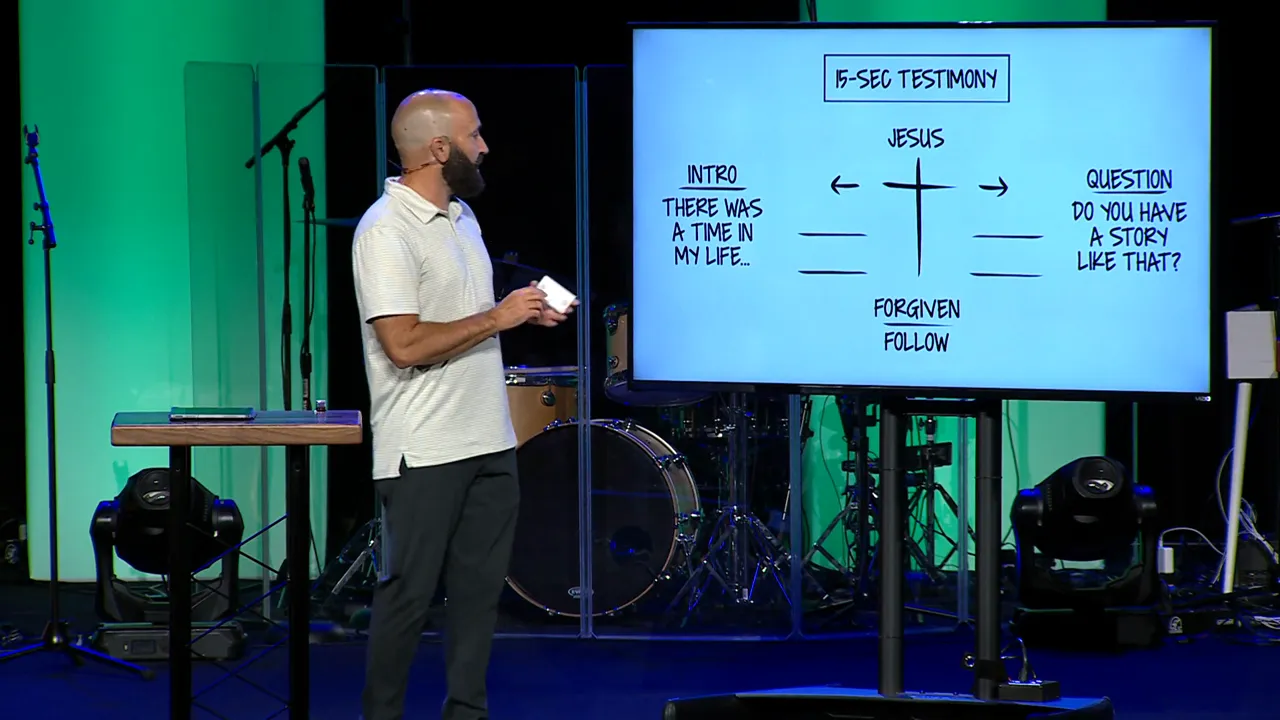 A clear story does not need to be long: who you were, how you met Jesus, and what changed.
Your story does not need to be dramatic to matter. It needs to be honest.
Paul gave a longer testimony. The man healed in John 9 gave a sentence: “I was blind but now I see.”
Both were powerful because both pointed to Jesus.
Try writing a 15-second version of your story. Keep it real. Name one part of your life that Jesus has changed. Then connect it to the hope you have now.
Vulnerability matters here. You can impress people with strengths, but you connect with people through weakness. When you are honest about your need for Jesus, you give someone else permission to be honest too.
LIVE INTERESTED, NOT PUSHY
Sharing Jesus should never mean forcing a moment.
It means loving people enough to care about their story. Ask good questions. Listen carefully. Pay attention to what they celebrate, what they fear, and what they carry.
You do not have to turn every conversation into a sermon. But you can be ready when the door opens.
A simple question can create space:
- “How can I pray for you this week?”
- “How are you really doing?”
- “What has this season been like for you?”
- “Would you want to hear what has helped me?”
This is not manipulation. It is love with courage.
And it takes the weight off when we remember that one conversation is rarely the whole story. People often need multiple encounters with the gospel before they are ready to respond. You may plant a seed. Someone else may water it. God brings the growth.
You do not have to close the deal. You are not a salesperson for Jesus.
You are an ambassador of His love.
TAKE THE INITIATIVE. TRUST THE SPIRIT. LEAVE THE RESULTS TO GOD.
Here is everyday evangelism in a sentence:
Take the initiative in the power of the Holy Spirit, and leave the results to God.
That is it.
God does not ask you to manufacture a response. He asks you to be available. To pray. To love. To tell the truth. To share what Jesus has done. To trust the Spirit with the rest.
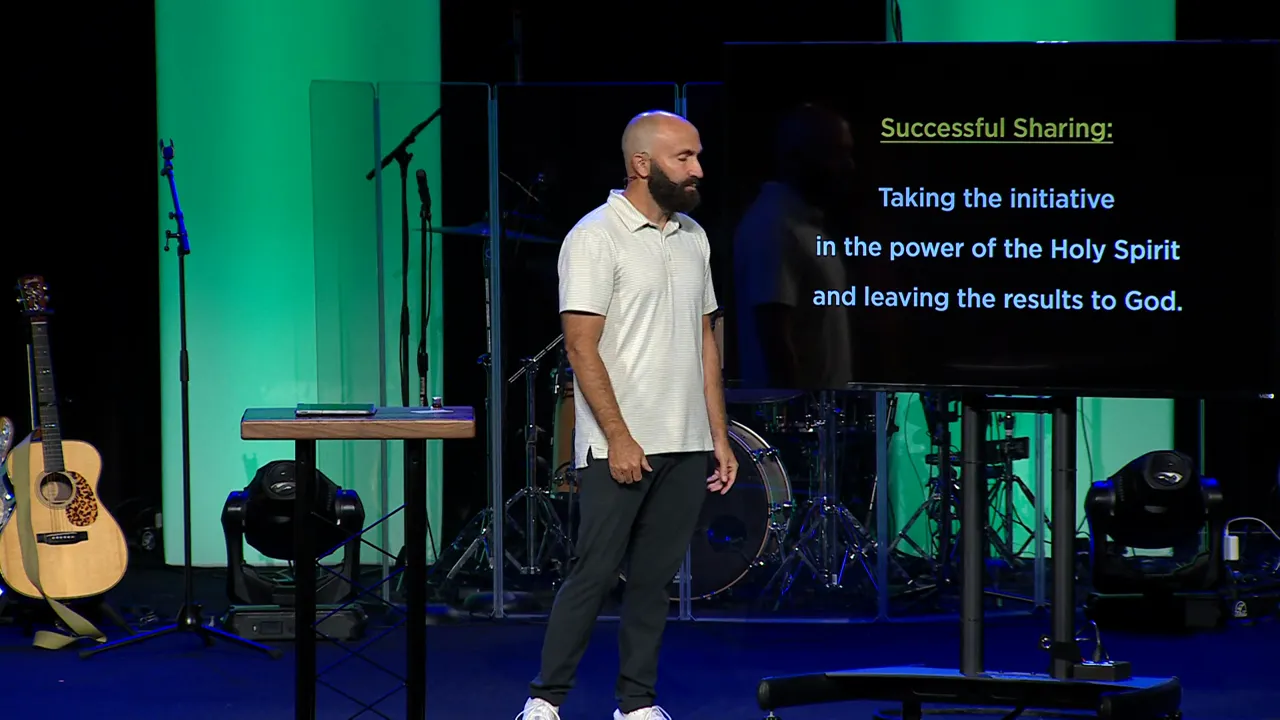 Start small. Prayer, preparation, genuine interest, and a willingness to share can change the way you move through every day.
Start here:
- Pray. Choose three to five people and pray for them daily.
- Prepare your story. Be ready to explain how Jesus has changed you.
- Live interested. Ask questions. Listen well. Love people with gentleness and respect.
- Share Jesus. When the moment comes, take the next faithful step.
THE GOOD NEWS IS WORTH SHARING
The gospel is not complicated.
God loves us and wants relationship with us. We ran from Him, and sin brought brokenness. But God did not leave us there. Jesus made a way. Through repentance and faith, we receive His love and become new creations, connected to God again.
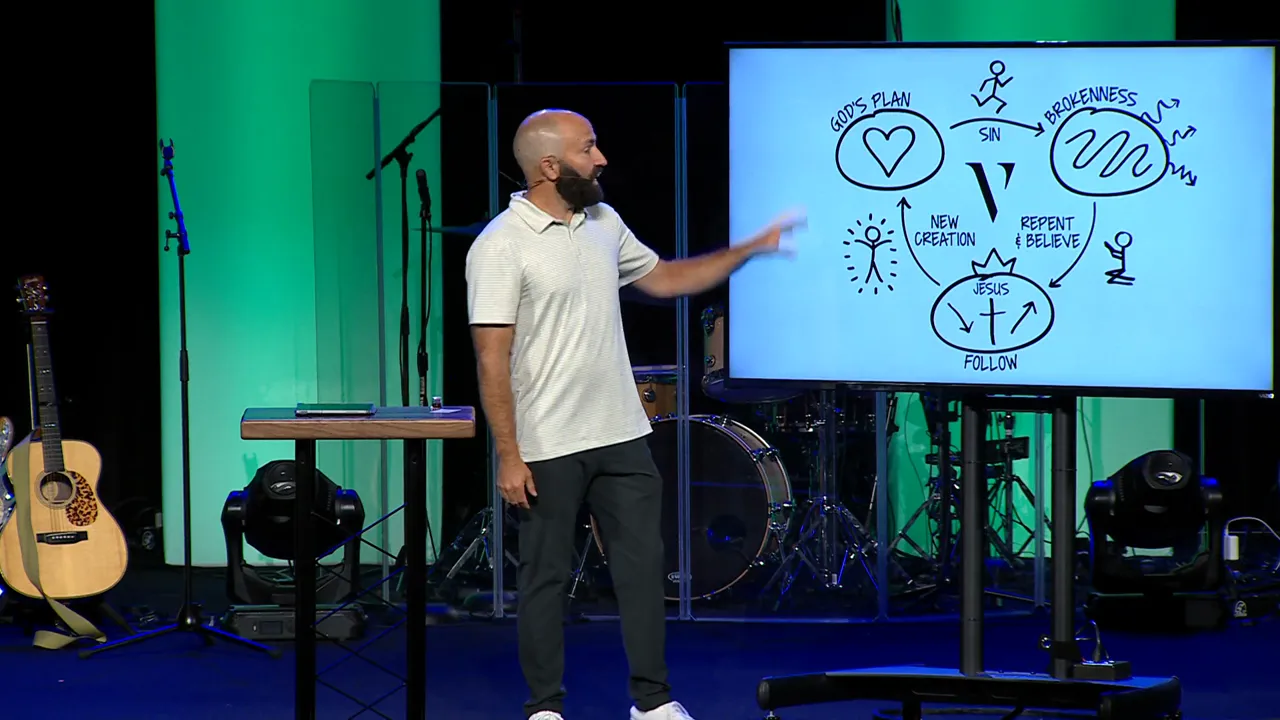 The good news is simple: God did not leave us in brokenness. Jesus made a way back to Him.
This is a story that must be told.
Not with pressure. Not with hype. Not with a need to impress.
With gratitude.
Everyday evangelism begins when we remember what Jesus has done for us. His body was broken for us. His blood was poured out for us. He took our place so we could know God, live free, and carry hope into a world that needs it.
You do not need to have it all together to share Jesus.
You just need Jesus.
And if you know Him, you are ready to be an everyday evangelist.
There are people in your life who need hope. There are conversations waiting to happen. There is more God wants to do through your ordinary, faithful yes.
Pray. Pay attention. Love people well.
Then trust Jesus to do what only He can do.